
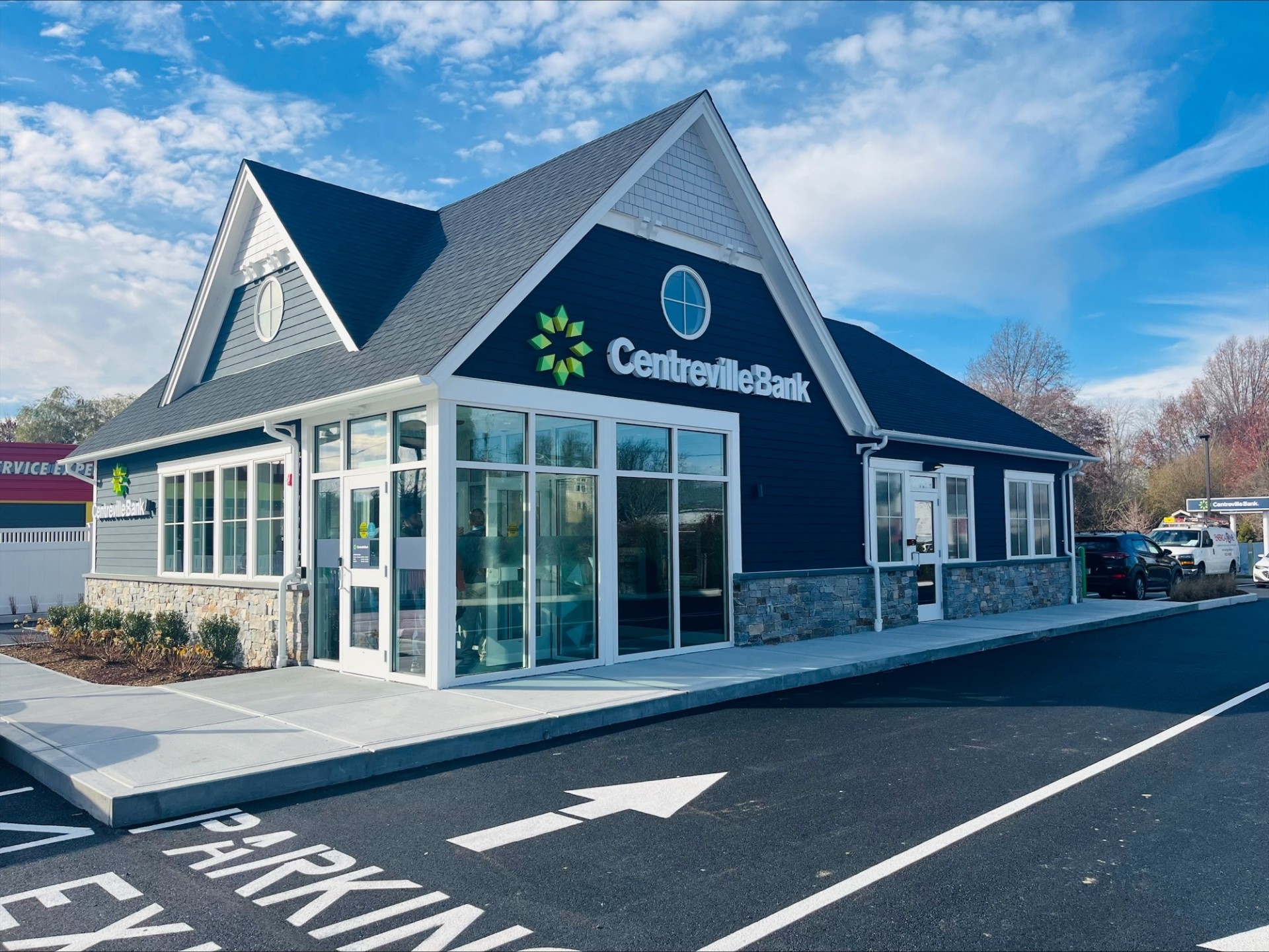
Small Roof, High Stakes, Watched From the Drive-Through Lane
A bank branch is a small flat roof with an outsized amount riding on it. The footprint is modest, but underneath it are the things that can't get wet, the vault, the server and network room, and a teller line full of customers, and the building sits where everybody can see it, with a drive-through lane parked a few feet from the parapet. A leak that would be a nuisance over a warehouse is a same-day business interruption over a bank. We approach these roofs knowing the field membrane is the easy part; the canopy transitions, the security coordination, and the visibility are what actually decide whether the project goes well.
Mobile's financial buildings run the full range. The downtown core around St. Joseph and Royal Streets holds the larger corporate banking floors and a few mid-rise office towers with bank tenants. The retail branches and credit unions spread along the Airport Boulevard, Government Boulevard, and Dauphin Street corridors and out into the eastern-shore retail strips in Spanish Fort and Daphne, with community banks and credit unions anchoring the Saraland and Tillmans Corner trade areas. The salt-laden air coming off Mobile Bay also goes to work on rooftop edge metal and fasteners faster here than inland, which we factor into material selection on every coastal branch.
The Drive-Through Canopy Is Where the Leaks Live
If a bank branch has a chronic leak, the canopy is the usual culprit. The drive-through and ATM canopy is a separate structure tied into the main building, and the joint where the canopy roof meets the building wall takes constant thermal cycling, vehicle and wash overspray, and differential settlement between two structures that move independently. Stock retail flashing details aren't built to absorb that movement over the long run, so we treat the canopy-to-wall transition as its own scope item, evaluate it separately, and re-flash it with a detail designed for differential movement. Replacing the field membrane alone never fixes a canopy leak, and we say so before the contract is written rather than after the first storm.
The rest of the penetration list on a financial building is also denser than the footprint suggests, generator transfer-switch rooms with rooftop exhaust, server-room precision cooling units that can't go offline, and ATM-kiosk enclosures all need individual flashing. We document each one before pricing.
Security Shapes the Schedule More Than the Roof Does
At a financial building, contractor access is governed in a way it isn't almost anywhere else. Badging, escort requirements for any work over vault-adjacent zones, and camera documentation of crew activity are standard at bank-owned properties. We pull vault and secure-room locations from the building drawings before mobilizing, sequence work over those zones into approved windows, and confirm with the security team that no active vault operations are affected by vibration or temporary access changes. All of that goes into the bid schedule and crew credentialing up front, so the security timeline isn't a surprise that adds cost after the fact.
Because the building is occupied Monday through Saturday with customers on the floor, we concentrate active tear-off and installation in off-hours and weekends and confirm the roof is watertight before the branch opens each morning. Work windows, noise limits during customer-service hours, and escort requirements are coordinated with the branch manager and corporate facilities.
What We Specify and How We Document It
For these small, highly visible flat roofs, a 60-mil TPO or PVC system over polyiso is the typical specification, with a reflective cool-roof surface that helps on cooling load through Mobile's long summers. On the bay-facing branches we step up to corrosion-resistant edge metal and fasteners to stand up to the salt air. Where a roof is near end of life but the deck is sound, an acrylic restoration coating can extend service life with minimal disruption to branch operations, a real advantage when shutting the lobby down isn't an option.
Corporate banking real-estate departments expect a defined paper trail, and we work inside it: insurance certificates and license verification before mobilizing, a pre-construction safety plan, daily work and dry-in reports, manufacturer warranty registered in the owner's name, and a final permit and inspection package from the City of Mobile. For institutions running multiple branches under centralized facilities management, we provide standardized scoping, documentation, and pricing across the portfolio with a single project-management contact.
Salt Air Is Working on the Branch You Can't See
The part of a bank roof that fails quietly on the coast is the metal. Salt carried in off Mobile Bay corrodes aluminum edge metal, coping, and fasteners from the outside in, and on a branch the edge metal is also the most visible part of the roofline from the drive-through lane, so corrosion reads as neglect to every customer who pulls up. On bay-facing branches in the downtown core and the closer-in corridors we specify corrosion-resistant edge metal and stainless fasteners from the start, and on existing roofs we check the terminations and coping first because that's where the salt does its damage before the field membrane shows any age at all. Catching it there is far cheaper than waiting for it to telegraph into a leak at the parapet.
Storm Season and the Building That Can't Flood
A bank can't take a roof failure during a storm the way a warehouse can shrug one off, water over the server room or the teller line shuts the branch down on the spot. Mobile's hurricane season runs June through November, so we design these small roofs for the wind and rain that come with it: edge metal and membrane attachment specified for the building's exposure, drains and overflow scuppers verified clear so a sudden downpour has somewhere to go, and the perimeter and corner zones detailed to the elevated standard those high-uplift areas need. A spring inspection ahead of the season clears the small flashing and drainage problems while the lobby is calm, and when storm damage does occur we document the condition and coordinate the scope with the insurance adjuster so the branch is back to watertight quickly.
One Contact Who Already Cleared Security
Security coordination is what makes bank roofing slow if it isn't handled well, so we run a single project manager through the whole job, the same person who clears the badging and escort requirements, knows where the vault and server rooms sit, and works the schedule with the branch manager and corporate facilities. For institutions with branches across the region, that one contact also keeps the documentation and pricing consistent from site to site, so a multi-branch program runs as one coordinated effort rather than a separate negotiation at every address.
How do you schedule around bank operating hours?
We concentrate active tear-off and installation in off-hours and weekends and confirm the roof is watertight before the branch opens each morning. Work windows, noise limits during service hours, and any escort requirements are coordinated with the branch manager and corporate facilities.
How do you handle the drive-through canopy connection?
As its own flashing item, separate from the field membrane. The canopy-to-wall transition is evaluated on its own and, where deteriorated, re-flashed with a detail built for the differential movement between the two structures. This is the most common branch leak and it's never solved by replacing the field membrane alone.
Can you work over an active vault or secure area?
Yes. We pull vault and secure-room locations from the drawings before mobilizing, sequence work over those zones into approved windows, and confirm with security that no active operations are affected by vibration or temporary access changes.
What documentation do financial institutions require?
Insurance certificates and license verification before mobilizing, a pre-construction safety plan, daily work and dry-in reports, manufacturer warranty registered to the owner, and a final permit and inspection package. We work within each institution's vendor-management process for approved-contractor registration.
Do you handle multi-site bank programs?
Yes. We provide standardized scoping, documentation, and pricing across a portfolio of branches, with a single project-management contact for the corporate facilities team.