
Municipal buildings throughout Mobile, Alabama carry unique roofing demands that go well beyond the standard commercial project. City Hall on Government Street, the Mobile County Courthouse, and the city's network of neighborhood fire stations all face the same coastal Gulf weather system: high humidity, salt-laden air, periodic tropical storm activity, and the intense solar heat that pushes interior cooling costs higher every summer. When any of these facilities needs a new roof or major repairs, the procurement process begins long before a contractor ever sets foot on the property.
Mobile operates under a competitive sealed-bid requirement for public roofing contracts that exceed the city's formal threshold, currently set at $50,000. Agencies submit specifications through the City of Mobile Purchasing Department, and all responsive bids are opened publicly at a scheduled date. Contractors who have not pre-qualified or who cannot demonstrate relevant municipal references risk disqualification before evaluation even begins. Working with a roofing firm that already understands Mobile's bid package format, knows the city's insurance certificate requirements, and can provide the performance and payment bonds the city demands saves the facility manager weeks of administrative back-and-forth.
Davis-Bacon Act prevailing wage compliance is not optional on any Mobile municipal project that receives federal funding, and many of Mobile's capital improvement programs do. The U.S. Department of Transportation and HUD both channel infrastructure dollars through Mobile's port and housing authorities, which means certified payroll submissions, apprenticeship ratios, and fringe benefit documentation are standard expectations. A roofing contractor that has never navigated federal wage determinations will struggle to stay in compliance once work begins, exposing the public agency to audit risk long after the project is complete.
Fire stations across Mobile's district boundaries present a particularly demanding roofing scenario. These facilities operate around the clock, and any roofing schedule must be sequenced so that apparatus bays remain accessible and living quarters stay habitable. The roof systems on these buildings also need to resist the radiant heat buildup common in South Alabama summers; a poorly ventilated or inadequately insulated deck can push attic temperatures above 150 degrees, degrading both the roofing membrane and the HVAC equipment below it.
Historic preservation constraints apply to several of Mobile's older civic buildings. The City of Mobile Historic Development Commission reviews exterior alterations to structures in recognized historic districts, and several downtown municipal buildings fall under that oversight. Roofing replacements on these properties often require low-slope membrane systems that are hidden behind existing parapets, preservation of original copper flashings where feasible, and documentation that replacement materials are compatible with the building's historic character. The approval process adds time to any project schedule and should be accounted for during the pre-bid planning phase.
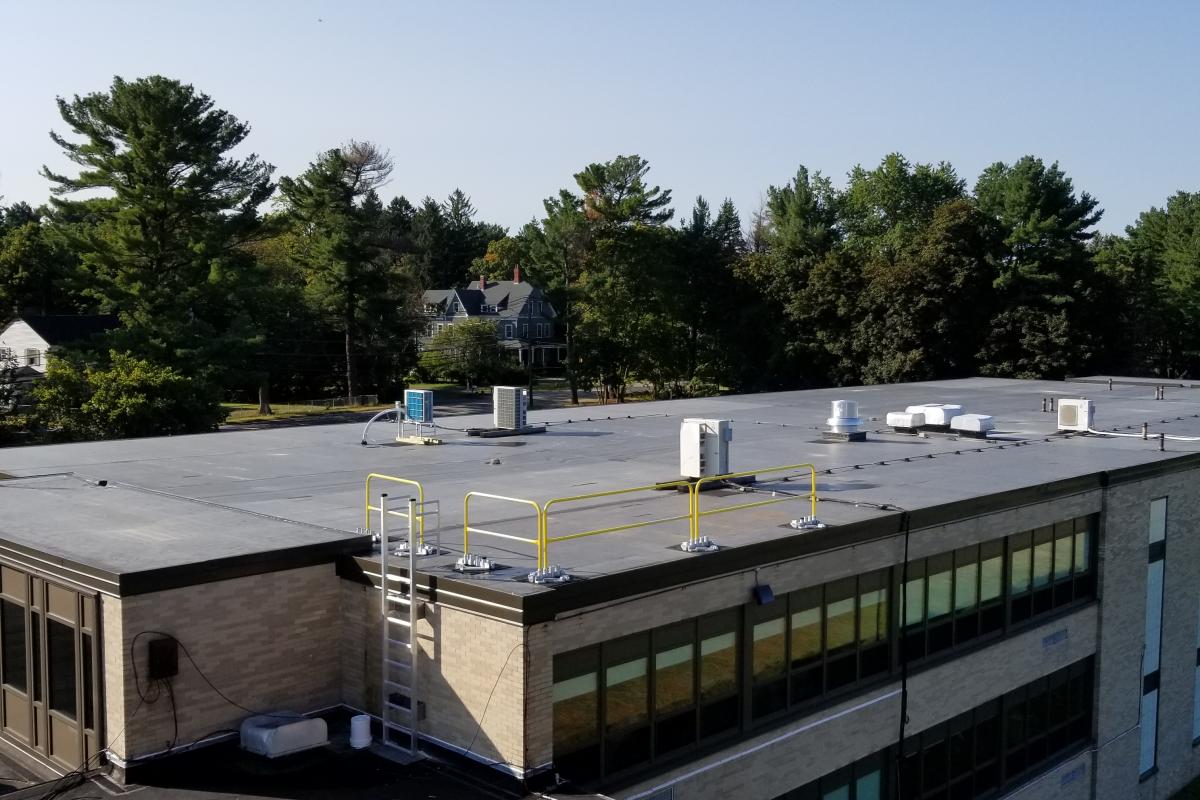
Energy performance standards have become a fixed part of Mobile's public facilities agenda. The city's sustainability initiatives align with Alabama Power's commercial energy efficiency programs, and facility managers are increasingly specifying cool-roof membranes with high solar reflectance index ratings. TPO and PVC single-ply systems in white or light gray are common choices on flat or low-slope Municipal roofs because they meaningfully reduce cooling loads in a climate that runs air conditioning ten months out of the year. Incorporating these systems into the bid specification also positions Mobile agencies favorably when applying for state energy efficiency grants.
Bonding requirements on Mobile public projects are structured to protect taxpayers. A bid bond, typically ten percent of the total bid amount, is required at submission. Upon award, the successful contractor must furnish a one-hundred-percent performance bond and an equal payment bond before a notice to proceed is issued. These instruments must be issued by a surety company licensed to do business in Alabama and listed on the U.S. Treasury's approved surety list. Smaller roofing firms that lack established surety relationships will be eliminated even if their base bid is competitive.
Warranty terms on government roofing contracts in Mobile reflect the public accountability that city procurement officers carry. Standard specifications call for a minimum ten-year manufacturer's system warranty covering both materials and workmanship, with the city named as an additional insured. Many agencies also require a separate two-year contractor-issued workmanship warranty that runs concurrently. Extended warranties of fifteen or twenty years are available through major membrane manufacturers and are increasingly written into specifications for high-priority facilities like the main public library branches and the municipal court building.
Managing a government roofing project in Mobile from bid through closeout requires organized documentation at every phase. Submittals, material approvals, daily logs, certified payrolls, and change order requests all need to move through the city's project management process on schedule. A contractor who understands Mobile's inspection protocols, can coordinate with the city's owner's representative, and maintains clean project records through substantial completion and final acceptance will build the kind of track record that wins repeat public work in the region for years to come.
- Does Mobile require prevailing wages on all city roofing contracts?
- Prevailing wage requirements apply when federal funds are involved in the project. Many Mobile capital improvement contracts include federal funding streams through transportation, community development, or housing programs, triggering Davis-Bacon compliance. Projects funded entirely from local general revenue may not carry this requirement, but contractors should verify funding sources before bidding.
- What bonding amounts does the City of Mobile typically require for roofing projects?
- Mobile generally requires a bid bond equal to ten percent of the base bid amount at the time of submission. Upon contract award, performance and payment bonds each equal to one hundred percent of the contract value are required before work begins. All bonds must be issued by a Treasury-listed surety licensed in Alabama.
- How does Mobile's historic preservation review affect roofing timelines?
- Buildings within Mobile's historic districts require review by the Historic Development Commission before exterior alterations proceed. This review can add four to eight weeks to a project schedule depending on the complexity of the proposed system and the completeness of submitted documentation. Engaging the commission during design rather than after bid award avoids delays.
- What roof types perform best on Mobile's municipal buildings given the coastal climate?
- TPO and PVC single-ply membranes with high solar reflectance perform well in Mobile's hot, humid climate by reducing cooling loads and resisting UV degradation. For facilities with significant wind uplift exposure near the Gulf Coast, fully adhered or mechanically fastened systems with enhanced edge metal details are preferred over ballasted assemblies.
- Can a roofing contractor participate in Mobile's public bidding process without prior municipal references?
- The City of Mobile's pre-qualification requirements typically include demonstration of relevant experience on public or commercial projects of comparable scale. While a first-time municipal contractor is not automatically disqualified, agencies commonly weight experience heavily during evaluation. Building a track record through smaller city contracts or county work is a practical path toward competing for larger municipal projects.