
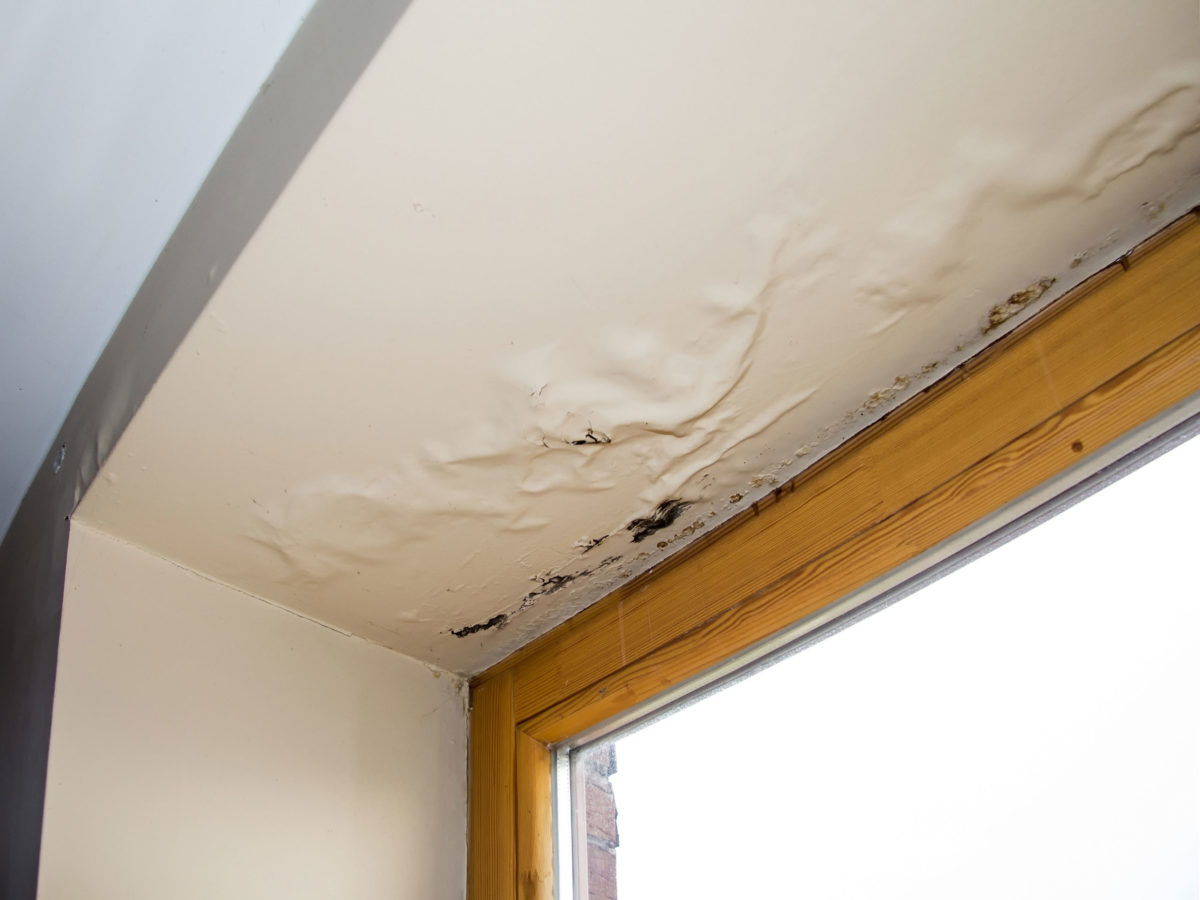
Some Wet Roofs Were Never Leaking From Above
A large share of the soaked commercial roofs we open in Mobile never had a hole in them. The water came from inside the building, or it got sealed into the assembly during construction and never found its way out. Mobile sits in a hot, humid subtropical climate where the air carries a heavy moisture load most of the year, and that humidity pushes water vapor up into roof assemblies in ways no rain leak can account for. We repair that specific failure mode: trapped moisture, blistered membrane, ridged seams, and insulation gone to mush under a surface that still looks intact from the parking lot.
It turns up across the building types this city runs on. Cold-storage and seafood-processing operations near the Port of Mobile hold high interior humidity against a chilled envelope. Restaurants, commercial kitchens, and laundries along the Airport Boulevard corridor drive moisture-laden air toward the deck every shift. Natatoriums, locker rooms, and lab spaces around the University of South Alabama and the Springhill medical district generate steady vapor pressure all day. In each case, if the roof was not built to move that vapor back out, the assembly slowly waterlogs itself from the inside.
How Vapor Drive Quietly Destroys an Assembly From Within
Warm, moist interior air wants to migrate toward cooler, drier air, and in this climate that path runs upward through the roof. When the vapor reaches a cold surface somewhere inside the assembly, it condenses into liquid water. A correctly placed, intact vapor retarder stops the vapor before it ever reaches that point. But if the retarder is missing, torn, or sitting on the wrong side of the insulation for a Gulf Coast building, the moisture condenses inside the roof and has nowhere to drain. It collects in the insulation, season after season, building up faster than the assembly can ever dry.
Saturated insulation is the root of nearly every symptom that follows. It loses its R-value, so the HVAC works harder and the deck above it runs colder, which condenses still more vapor in a feedback loop. On a steel deck, the trapped water starts corroding the panel from the top down, completely out of sight, until the deck loses load capacity. The wet substrate also stops gripping the membrane and fasteners the way the original design assumed. We have cut into Mobile roofs that read nearly clean from the surface and found insulation that wrung out like a sponge over decking flaking with rust.
Blisters, Ridges, and the Soft Spot Underfoot
Trapped moisture leaves a recognizable signature, and we read it during diagnosis. Blisters form when vapor or air gets caught between membrane plies or between the membrane and the substrate; the sun heats the pocket, the trapped vapor expands, and the sheet domes up. On built-up and modified-bitumen roofs those blisters can grow wide and eventually split, turning an internal-moisture problem into an open leak overnight. Ridging shows up as long raised lines tracking the insulation board joints or the membrane seams, usually a sign moisture has gotten into the joints and the materials are swelling and shifting against each other.
Underfoot, wet insulation feels soft and spongy next to the firm areas around it, and ponding water that lingers for days after a rain points to insulation that has compressed and lost its pitch to the drains. We map all of these conditions across the roof and back the visual survey with infrared scanning and verification cuts. A thermal pass after sunset finds the wet zones, because saturated insulation gives back the day's heat slower than dry insulation, and core cuts at the flagged areas confirm exactly how deep the damage runs and whether the deck has begun to corrode. That gives us a true picture of how much of the roof is wet, which is what dictates the repair.
Why You Cannot Just Recover Over a Wet, Misbuilt Roof
The condition we find drives the scope, and we lay out the honest options instead of defaulting to the biggest one. When the wet insulation sits in discrete zones with sound, dry roof around it, we cut out the saturated material, set in new dry insulation, rebuild the slope where it was lost, and weld or detail the membrane back over the repair. Done early, this stops a humidity problem before it becomes a full tear-off. We also correct the source where it is local, resealing the failed penetration or flashing that let moisture in.
When the moisture is widespread, the math flips. Once saturated insulation covers a large fraction of the roof, or the steel deck has corroded, patching is neither durable nor honest, and the assembly has to come off and be rebuilt. Here is the critical part on a humidity-driven failure: you cannot simply lay a recover membrane over the top of a wet, misdesigned assembly and walk away. If the vapor retarder is absent or on the wrong side, an overlay seals the same moisture in and recreates the identical failure in the new roof within a few seasons. When we rebuild, we put the vapor management where this humid climate actually requires it and specify insulation and a membrane matched to the building's interior conditions, so the new roof does not inherit the old one's mistake.
Fixing the Damage, Then Shutting Off the Source
Repairing the roof is only half the job; the other half is making sure the moisture stops accumulating. Where the source is interior humidity, the real fix reaches past the membrane: confirming the vapor retarder is correct for the assembly, improving how the moisture-heavy spaces below are exhausted, and sealing rooftop equipment and curbs so they are not feeding more vapor into the deck. We coordinate with the building's mechanical realities so the roof and the conditioned interior stop working against each other.
For Mobile owners who have chased recurring leaks, ceiling stains, and climbing cooling bills with no obvious failure visible on the roof, trapped moisture is very often the answer hiding in the assembly. We start with a moisture survey, hand you the thermal map and the core results, and price the diagnostic, the targeted repair, and the full rebuild as separate options, so the decision stays yours and rests on what is genuinely inside the roof. Catching it while it is still a repair scope, before the deck rusts through and the call becomes a forced replacement, is the entire point of getting on it early.