
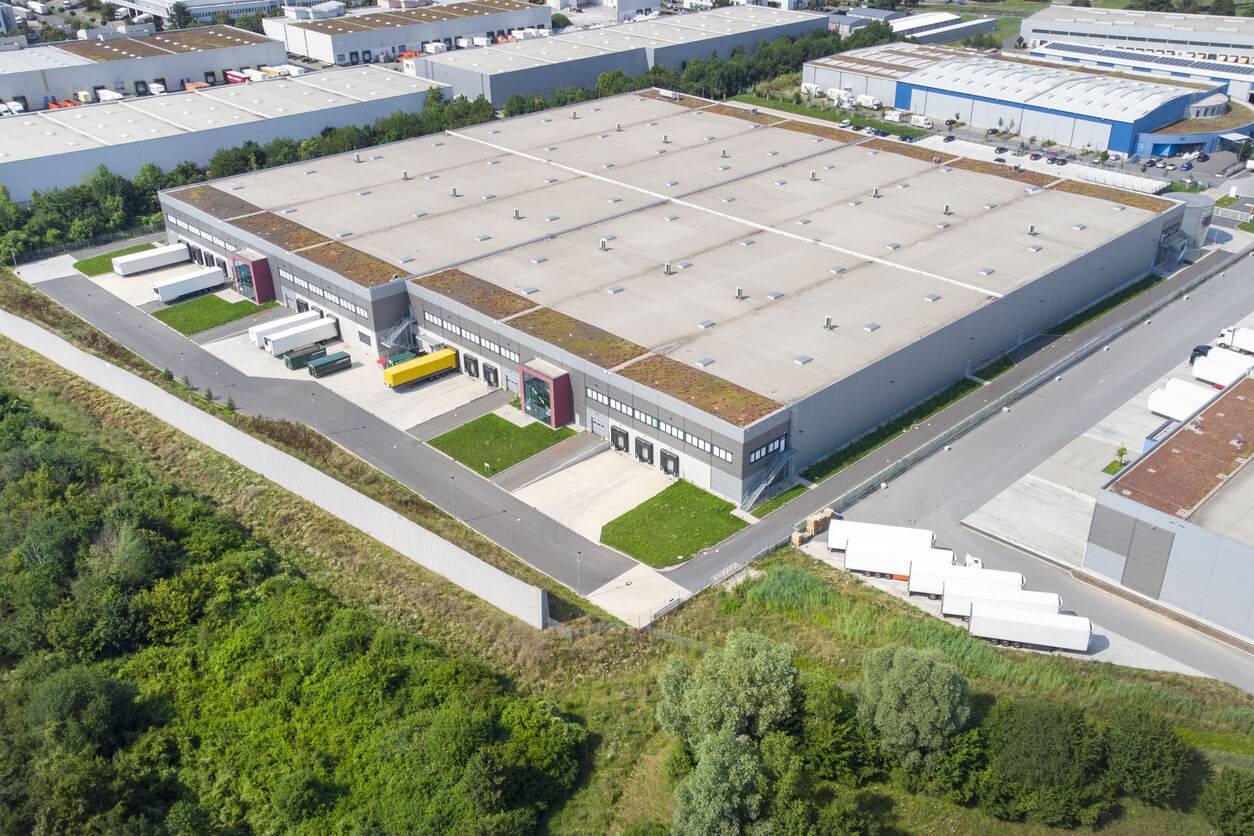
The Port of Mobile is the largest port in the Deep South and one of the busiest in the United States, moving coal, steel, containers, and forest products through the Alabama State Docks and the privately operated terminal facilities along the Mobile River and Mobile Bay. The industrial zone that surrounds and serves the port, steel processing, bulk material handling, chemical transfer, rail-to-marine transshipment facilities, runs under a combination of exposures that would challenge most roof systems: 67 inches of annual rainfall, active hurricane seasons that have produced Katrina in 2005 and Sally in 2020, salt air from Mobile Bay, and a summer heat and humidity combination that makes untreated roof surfaces feel like frying surfaces. We know this environment intimately because we work in it every month of the year.
Austal USA's shipbuilding operation and the legacy Avondale industrial shipyard infrastructure in the metro area represent heavy industrial facilities that require roofing contractors with experience in demanding production environments. Shipbuilding facilities have large, open spans, constant overhead crane movement, welding operations that produce spark and heat exposure at the roof surface near clerestory openings, and industrial processes that can produce chemical exhaust affecting rooftop materials. The building stock in the shipbuilding and heavy marine industrial sector tends to be older, pre-1990 construction in many cases, with accumulated layers of maintenance patching on original built-up roofing systems. We conduct thorough core sampling and infrared scanning on these buildings before recommending reroof approaches because the substrate condition often tells a different story than the visible surface.
Airbus U.S. Manufacturing Facility in Mobile is one of the most significant aerospace manufacturing investments in the Gulf South, and it anchors an industrial aerospace cluster that includes suppliers, MRO facilities, and precision manufacturing operations. Aerospace manufacturing facilities have demanding roof requirements: clean room zones with positive pressure that must be maintained during roofing work, sensitive manufacturing environments where debris and dust intrusion during reroof operations can cause quality holds on production lines, and building envelope requirements driven by temperature and humidity control needs that go well beyond standard industrial. We've coordinated with aerospace facility management on roofing projects that required pre-construction clean room protection protocols, daily debris containment procedures, and building envelope testing before, during, and after work phases.
The I-65 and I-10 industrial corridors feeding into Mobile from the north and east carry a substantial logistics and distribution sector that serves the port and the broader Gulf South market. These warehouse and distribution buildings are generally low-slope construction with metal or single-ply membrane systems, and they face the full range of Mobile weather: summer hurricane season, intense afternoon thunderstorms delivering large rainfall totals in compressed time windows, and the occasional Gulf tropical system that doesn't quite reach hurricane status but still delivers wind speeds and rain totals that test seam and flashing integrity. Drainage design on Mobile distribution roofs needs to account for the rainfall intensity that tropical systems deliver, a 6-inch-per-hour rain rate isn't a planning assumption in most markets, but it is in Mobile.
Thyssenkrupp Steel USA and the Calvert, Alabama steel facilities nearby anchor a metals processing and distribution industrial cluster that operates in a chemically active environment. Steel mills and processing facilities generate slag dust, metallic particulate, and process chemical exhaust that settle on roof surfaces and accelerate membrane and metal component degradation. We specify coatings and membrane materials on steel industry-adjacent roofs that are rated for particulate accumulation and periodic mechanical cleaning without membrane damage. Annual power washing of roof surfaces at these facilities is a standard maintenance recommendation to prevent the accumulation layer from becoming so thick that it retains moisture against the membrane surface between rain events.
Hurricane Sally's 2020 landfall near Gulf Shores put severe winds and extraordinary rainfall, over 30 inches in some locations during the storm, on Mobile industrial roofs that in some cases hadn't been professionally inspected since Katrina. What we found in the post-Sally assessment work was a pattern familiar from every Gulf Coast hurricane aftermath: roofs that had been performing adequately in normal weather failed in storm conditions because deferred maintenance issues, open seams, deteriorated flashings, degraded caulk at penetrations, had created vulnerabilities that the storm exposed. Our standard recommendation for any industrial building owner in the Mobile metro is a professional roof inspection on a two-year cycle at minimum, with post-named-storm inspections whenever the metro area experiences winds above tropical storm strength regardless of whether interior damage is apparent.
Salt air penetrates deep into the Mobile metro area, and Mobile Bay's tidal exchange means that salt-laden humidity affects industrial buildings as far inland as the I-65 corridor. We use corrosion-resistant fastener specifications on all industrial projects in the Mobile market without exception, specify aluminum or stainless edge metal, and assess existing metal components for corrosion during reroof surveys. Rusted coping caps and counter flashings are a recurring finding on Mobile industrial buildings, they're often the component that fails first in a storm because corrosion has degraded the metal's ability to hold fasteners under wind load. We replace metal flashings that are more than 20 percent corrosion-degraded rather than painting over the problem.
The petrochemical corridor along the Mobile River and toward the Alabama Gulf Coast adds chemical exposure considerations specific to petroleum storage and processing environments. Tank farm support buildings, truck loading rack roofs, pipeline valve and control structures, and chemical storage buildings in the Mobile industrial area need roofing systems with chemical resistance to petroleum derivatives, appropriate fire-rating where the occupancy requires it, and penetration sealing that accounts for the differential thermal expansion of metal pipe penetrations through rubber-backed membrane systems. We've specified and installed roofing on active petroleum facility support structures that required hot work permits for every membrane heat weld operation and daily work area gas monitoring during installation.
We serve the full Mobile industrial market: port terminal facilities, shipbuilding and marine industrial, aerospace manufacturing, distribution and logistics, steel processing, and petrochemical. Mobile is a working industrial city with a layered industrial real estate market that includes some of the most technically demanding facilities in the Gulf South. If you're managing industrial property here and want honest answers about your roof's condition and the options available to you, we're ready to start with a proper inspection rather than a sales pitch.
Questions Owners Ask
How should we prepare our Mobile industrial roof before hurricane season every year?
Pre-hurricane season roof preparation on Mobile industrial buildings should include a professional inspection in April or May focused on seam integrity, flashing adhesion and condition, drain clearance and adequacy, and the condition of all caulked penetrations. Any open seams, lifted flashings, or deteriorated caulk needs to be addressed before June 1. We also recommend confirming that overflow drainage paths are unobstructed, in a tropical system that delivers rainfall at rates your primary drainage can't keep up with, the overflow path is what prevents structural loading from ponding. For buildings with rooftop mechanical equipment, verify that equipment mounting fasteners and equipment curb flashings are intact. Equipment that shifts or lifts in high winds creates immediate roof damage if its attachment to the curb or deck fails.
What's the best approach for reroofing an active Austal USA or shipbuilding-adjacent industrial building without disrupting production?
Reroofing an active heavy industrial facility requires detailed pre-construction coordination with facility operations to map work zones against production areas, crane travel paths, and safety exclusion zones. We conduct a formal pre-construction meeting with facility management, safety, and production scheduling to define daily work start and end times, debris containment requirements, hot work permit protocols, and emergency communication procedures. Work in zones directly above active production is scheduled during planned production shutdowns where possible, or during shift changes when that zone's overhead cranes and production equipment are inactive. Every night we demobilize, the roof is in a watertight temporary condition, we do not leave open deck areas regardless of weather forecast because industrial production downtime from water intrusion is measured in much larger numbers than roofing day rates.
Our Mobile warehouse roof develops significant standing water after major rain events. What's the right fix?
Standing water on Mobile industrial roofs is typically a combination of inadequate original drainage design, deck deflection over time, and clogged or undersized drains. The correct fix depends on which factor dominates. Clogged drains are a maintenance correction. Deck deflection creating low spots is usually addressed with tapered insulation crickets installed over the existing system to re-establish positive drainage toward the drains. Fundamentally undersized drains require drain replacement or addition of supplemental drains. Mobile's rainfall intensity during tropical events, we see rainfall rates that exceed what many drainage systems were designed for, means that some buildings need drain system upgrades simply because original design assumptions were inadequate for the current climate pattern. We assess all three factors in our drainage evaluation and recommend the combination of corrections that addresses the actual cause rather than treating the symptom.
Does roofing work at the Alabama State Docks or Port of Mobile facilities require special certifications or procedures?
Port of Mobile and Alabama State Docks facilities require contractor TWIC card compliance for workers accessing secure port areas, and facility-specific safety orientation is required before workers are permitted on port property. We maintain a workforce with current TWIC credentials and can meet port authority safety training requirements. Crane operations in port areas require advance coordination with port facility management and may require Marine Exchange coordination for lifts near active berths. Materials staging in active port areas is subject to port security protocols and cargo movement priority, we coordinate staging locations and delivery scheduling with port operations management to avoid conflicts with active vessel loading and unloading. These requirements add pre-construction coordination time but are standard practice for contractors who work regularly in Gulf South port facilities.
How does Mobile's 67-inch annual rainfall affect the expected service life of a new industrial roof system?
High annual rainfall accelerates several specific degradation mechanisms in roofing systems. Frequent wet-dry cycles work seam adhesion more intensively than in drier climates. Standing water after heavy rain events increases hydrostatic pressure on seams and accelerates membrane surface weathering where water pools. Organic growth, algae and mold, establishes more aggressively on roof surfaces in Mobile's warm, wet climate than in most other markets and can degrade membrane surfaces if not addressed through regular cleaning or algaecide-treated surfacing. That said, a properly specified and installed single-ply membrane on a well-drained roof in Mobile should still achieve a 20-plus-year service life. The key variables are adequate drainage design, quality of seam work during installation, and a consistent annual maintenance program. Roofs that perform poorly in Mobile typically have drainage problems or maintenance neglect, not inherent system failures.