
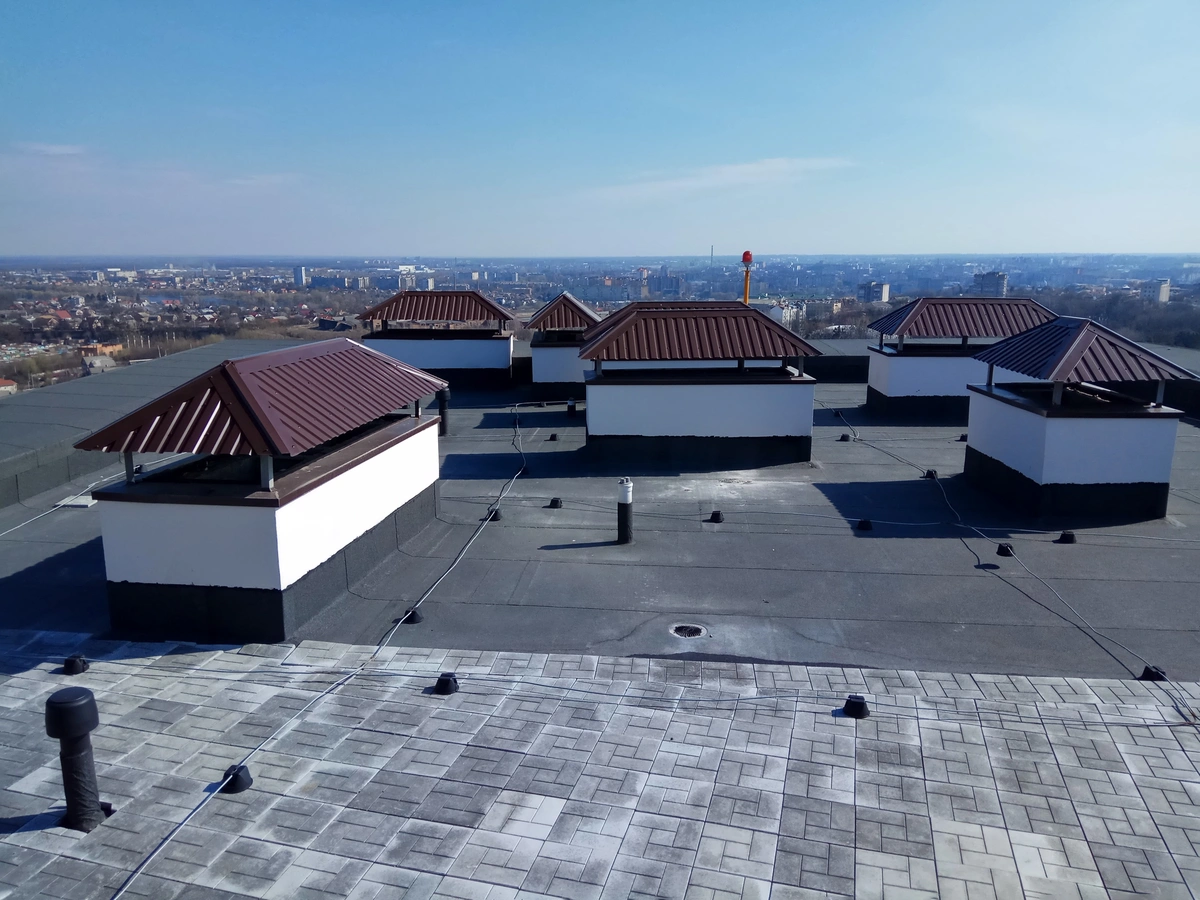
The RSA Tower on St. Francis Street in downtown Mobile, the Retirement Systems of Alabama's gleaming twenty-five-story headquarters, anchors the Class A office market in Alabama's oldest city and represents the standard against which commercial roofing projects on mid-rise office buildings throughout Mobile are measured. Class A and Class B office buildings in Mobile face a roofing environment shaped by Gulf Coast hurricane risk, salt-air accelerated membrane degradation, and the occupied-building protocols required when tenants are working beneath the roof deck and cannot be displaced for construction activity. Every re-roofing project on a Mobile office building is, above all, a logistics and coordination challenge wrapped in a technical one.
Occupied building protocols for Mobile office re-roofing begin with the recognition that tenants in a Class A building have legal protections under their leases and practical expectations about construction noise and dust infiltration that govern when and how work can proceed. Tear-off of existing roofing systems must avoid the HVAC intake periods (typically 7 a.m. to 6 p.m. on weekdays) unless the building engineer can confirm that the intake system can be temporarily isolated. Air-quality monitoring inside the building during tear-off is standard practice on Class A projects, and results should be shared with building management daily. Weekend work, when tenant floors are unoccupied, is the preferred schedule for high-dust activities like tear-off and adhesive application.
Green roof options are occasionally considered for Mobile office buildings, and when they are, the coastal storm environment fundamentally changes the design parameters. A vegetated green roof assembly in Mobile's hurricane zone must be engineered to resist wind uplift with the growing medium in place, a saturated growing medium layer can weigh forty to sixty pounds per square foot, and in a Category 2 hurricane wind field that weight becomes a projectile if the assembly's wind anchoring system fails. Any green roof proposal for a Mobile office building should be reviewed by a Florida or Alabama PE familiar with coastal green roof engineering, using ANSI/SPRI RP-14 or equivalent guidance as the design standard.
HVAC coordination is the most technically demanding aspect of a Mobile office building re-roofing project. The rooftop equipment on a typical Class A office building in Mobile includes chiller condenser units, cooling towers, fresh-air intakes, exhaust fans, and elevator penthouse equipment, all of which must be disconnected, temporarily supported, and reconnected around the roofing work. Each piece of equipment creates a curb penetration that must be reflashed, and the re-flashing sequence must be planned so that each unit is disconnected for the minimum time required to complete the curb flashing. In Mobile's summer heat, losing air conditioning to even one floor of a Class A building for more than a few hours creates a tenant relations crisis.
Energy codes for Mobile office buildings require compliance with Alabama's Commercial Energy Code, which adopts the IECC's requirements for Climate Zone 2 and mandates cool roof compliance on re-roofing projects that trigger full code applicability. A reflective membrane at SRI 75 or higher significantly reduces the cooling load on a Mobile office building, where mechanical cooling operates for ten to eleven months of the year. The combination of a sixty-mil white TPO membrane and polyisocyanurate insulation at R-25 or above brings a Mobile office building's roofing assembly into compliance with current code and can reduce HVAC operating costs by fifteen to twenty percent compared to a pre-2010 dark-membrane BUR system.
Lease obligations are a critical driver of re-roofing timing for Mobile office buildings. Class A office leases in Mobile typically include landlord covenants requiring that the building be maintained in good condition, and a documented roof that is beyond its expected service life can create tenant claims if moisture infiltration damages tenant improvements. The best time to assess a Mobile office roof's remaining life is immediately after hurricane season, October and November, when any storm-related damage is fresh and the assessment results can be used to plan a re-roofing project for the following spring construction window. Roof assessments should be documented with infrared moisture surveys to identify wet insulation that is not visible on surface inspection.
Cool membrane selection for Mobile office buildings involves balancing the thermal benefit of high SRI against the wind-uplift requirements of the coastal zone. The highest-SRI membranes available are light-colored PVC, white TPO, and silicone-coated modified bitumen, all of which can achieve SRI values above 90. Among these, mechanically fastened white TPO with FM-approved wind uplift assembly at the appropriate coastal wind speed is the most practical specification for a Mobile Class B office building. Class A buildings with architectural parapet details may prefer a fully adhered TPO or modified bitumen smooth cap sheet in a light color that accommodates the more finished appearance expected by Class A tenants and property managers.
Signage and communication antenna penetrations are common on Mobile office building roofs and require detailed flashing coordination during re-roofing. Building signage attached to parapet faces often includes structural anchors that penetrate the parapet cap and create moisture pathways if the flashing around them is not maintained. Communication antennas and satellite dishes on office roofs require individual pitch pockets or pre-formed EPDM boots at their base mounts, sealed with polyurethane caulk and covered with metal caps. During re-roofing, each antenna and signage anchor must be documented, temporarily supported if necessary, and reflashed to current standards as the new membrane is installed around them.
Selecting a roofing contractor for a Mobile office building re-roofing project requires verifying their experience with occupied-building protocols, their bonding and insurance levels appropriate for a Class A property, and their relationships with local tenants and property managers who can provide references for occupied-building project performance. Alabama requires a commercial roofing contractor license, and the contractor should be able to demonstrate clean Alabama Contractors Licensing Board standing. A pre-construction meeting that includes the building engineer, tenant representatives, and the roofing contractor to review the occupied-building protocol is standard practice on Class A Mobile office projects.
- What occupied-building protocols apply to office re-roofing in Mobile?
- Avoid tear-off during HVAC intake periods (7 a.m. to 6 p.m. weekdays) unless the intake can be isolated. Monitor air quality inside the building during tear-off and share results daily with management. Schedule high-dust activities on weekends when tenant floors are unoccupied. Coordinate all HVAC disconnections to minimize time any system is offline.
- Are green roofs viable on Mobile office buildings?
- Technically yes, but coastal storm engineering is mandatory. A green roof assembly in Mobile's hurricane zone must be engineered to resist wind uplift with saturated growing medium in place, using ANSI/SPRI RP-14 or equivalent design standards reviewed by a PE familiar with coastal green roof engineering.
- What energy code requirements apply to office roof re-coverings in Mobile?
- Alabama's Commercial Energy Code (IECC Climate Zone 2) requires cool roof compliance on re-roofing projects that trigger full code applicability. A reflective membrane at SRI 75 or higher is required. The combination of white TPO and R-25 polyiso reduces HVAC operating costs fifteen to twenty percent versus pre-2010 dark membrane systems.
- How should signage anchor penetrations be handled during office re-roofing?
- Document all parapet signage anchors and antenna mounts before work begins. Temporarily support any sign that must be disconnected from its parapet anchor during flashing work. Reflash every anchor penetration to current standards with polyurethane-sealed pitch pockets or pre-formed boots and metal caps as the new membrane is installed.
- When is the best time to assess a Mobile office building roof?
- Immediately after hurricane season, October and November, when storm-related damage is fresh and can be documented for insurance and planning purposes. Include an infrared moisture survey to identify wet insulation not visible on surface inspection, and use the assessment to plan a re-roofing project for the following spring construction window.