
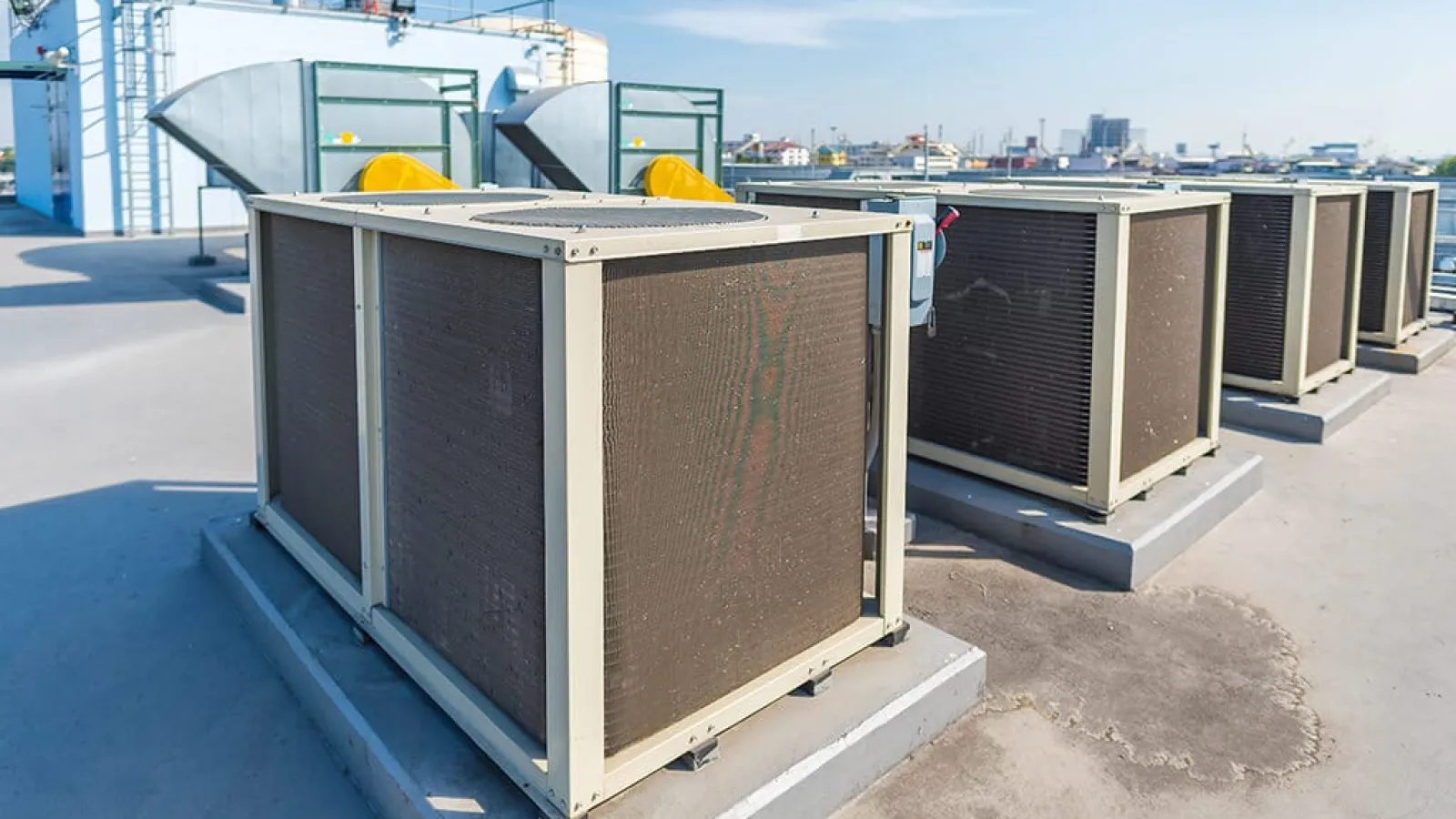
Denny's on Government Boulevard in Mobile, Alabama represents the kind of 24-hour quick service restaurant operation where the roof is under continuous stress from kitchen exhaust systems that never fully stop, HVAC equipment cycling constantly to maintain comfort in a subtropical climate, and the Gulf Coast weather events that can bring three inches of rain in an hour or Category-2 sustained winds within a single storm season. Restaurant roofing in Mobile is not a once-every-twenty-years maintenance event, it is an active system management discipline that requires understanding the specific demands that commercial kitchen operations place on every component of the roof assembly.
Type I commercial hood exhaust is the defining penetration challenge on any Mobile restaurant roof. A Type I hood over a cooking line produces continuous high-temperature exhaust that contains grease vapor, combustion byproducts, and moisture. This exhaust exits the building through a penetration in the roof membrane, and the detail at that penetration is one of the most failure-prone locations on any restaurant roof. We specify stainless steel exhaust hoods with internal grease containment collars, curb-mounted with a pitch pocket that is sealed with appropriate high-temperature sealant and inspected annually for grease accumulation. Grease accumulation in an unsealed pitch pocket creates a fire hazard, not just a leak hazard.
Fire suppression system penetrations for commercial kitchen hoods require the same careful treatment as the exhaust penetrations they serve. The ansul or dry chemical suppression lines that run from the storage cylinder to the cooking line must penetrate the roof assembly at some point, and each penetration must be sealed and maintained to prevent both water intrusion and compromised fire suppression performance. We coordinate fire suppression system penetrations with the restaurant's fire protection contractor and ensure that our membrane details are compatible with the suppression system's maintenance requirements.
Mobile's subtropical humidity creates a year-round condensation risk for restaurant roofs because the kitchen produces significant interior moisture, the exterior is highly humid, and the difference in vapor pressure between the kitchen and the outdoor air is high. Vapor management in a Mobile restaurant roof requires a vapor retarder on the appropriate side of the insulation assembly, in Mobile's climate, interior moisture drive means the retarder belongs below the insulation on the warm interior surface. A restaurant roof with the vapor retarder in the wrong position will develop wet insulation within three to five years regardless of membrane condition.
Mobile's hurricane exposure requires the same wind uplift resistant membrane assemblies for restaurant roofs that it requires for any commercial building. Fast food and quick service restaurants typically have flat or low-slope roofs with large uninterrupted membrane fields that are vulnerable to progressive uplift failure if the membrane is not properly adhered. We design all Mobile restaurant roof assemblies to resist the ASCE 7 coastal design wind speeds, using fully adhered systems at corners and perimeters where uplift pressures are highest.
Drainage is a particular concern for Mobile restaurant roofs because grease-laden condensate from exhaust systems can flow back onto the roof surface during low-wind conditions, and standing grease on a membrane surface accelerates degradation dramatically. We design drainage paths that route grease condensate to contained collection points rather than allowing it to spread across the membrane field, and we specify membrane materials that have been tested for resistance to grease exposure in the areas immediately around exhaust penetrations.
Restaurant owners and managers typically lack roofing expertise, and a roof that is failing gradually is often not noticed until there is an interior water problem that disrupts operations. We recommend annual roof inspections for all Mobile restaurant operators as a standard maintenance practice, focused specifically on the exhaust penetrations, the HVAC curbs, and the drain terminations that are most likely to develop problems before they become visible interior leaks. An inspection that finds and seals a failing pitch pocket costs a few hundred dollars; the same neglected pitch pocket can cause a grease fire that costs the business entirely.
Alabama requires a general contractor's license for commercial construction, and Mobile requires building permits for re-roofing work on existing commercial buildings. Restaurant re-roofs are sometimes complicated by the interaction between the roofing permit and the mechanical permit for any exhaust system modifications that occur simultaneously. We coordinate with the restaurant operator's mechanical contractor to ensure that all trade work at the roof level is permitted under the correct permit type and that inspections are sequenced correctly.
The Mobile restaurant market serves the region's year-round hospitality economy, and quick service restaurants on the Government Boulevard and Airport Boulevard corridors operate at high volumes seven days a week. A roof failure that forces even a temporary closure is a material business event for an operator whose margins depend on continuous operation. Investing in a properly specified and maintained roof system is the cost of continuous business, and we help Mobile restaurant operators understand that value clearly.
- How do you detail Type I exhaust hood penetrations on a Mobile restaurant roof?
- We use stainless steel exhaust hoods with internal grease containment collars, curb-mounted with sealed pitch pockets using high-temperature sealant. Penetrations are inspected annually for grease accumulation, which creates fire hazard if allowed to build up in unsealed details.
- What membrane resists grease exposure near restaurant exhaust penetrations?
- EPDM and certain modified bitumen formulations have better resistance to grease exposure than standard TPO. We specify grease-resistant membrane in the immediate area around all exhaust penetrations and use protection board under the membrane where grease condensate is likely to reach the roof surface.
- How does Mobile's humidity affect vapor management in a restaurant roof?
- Mobile's high humidity combined with kitchen moisture production means vapor drives inward from both the exterior and the interior simultaneously. The vapor retarder must be correctly positioned below the insulation on the interior surface to prevent wet insulation from developing within the assembly.
- How often should a Mobile restaurant roof be inspected?
- We recommend annual inspections focused on exhaust penetrations, HVAC curbs, and drain terminations. These are the locations most likely to develop problems, and early detection prevents the grease fire and water damage scenarios that force operational closures.
- What permits are required for a Mobile restaurant re-roof?
- Mobile requires a commercial building permit for re-roofing. Projects that include exhaust system modifications require a separate mechanical permit. We coordinate permitting with the restaurant operator's mechanical contractor to ensure correct permit types and inspection sequencing.