
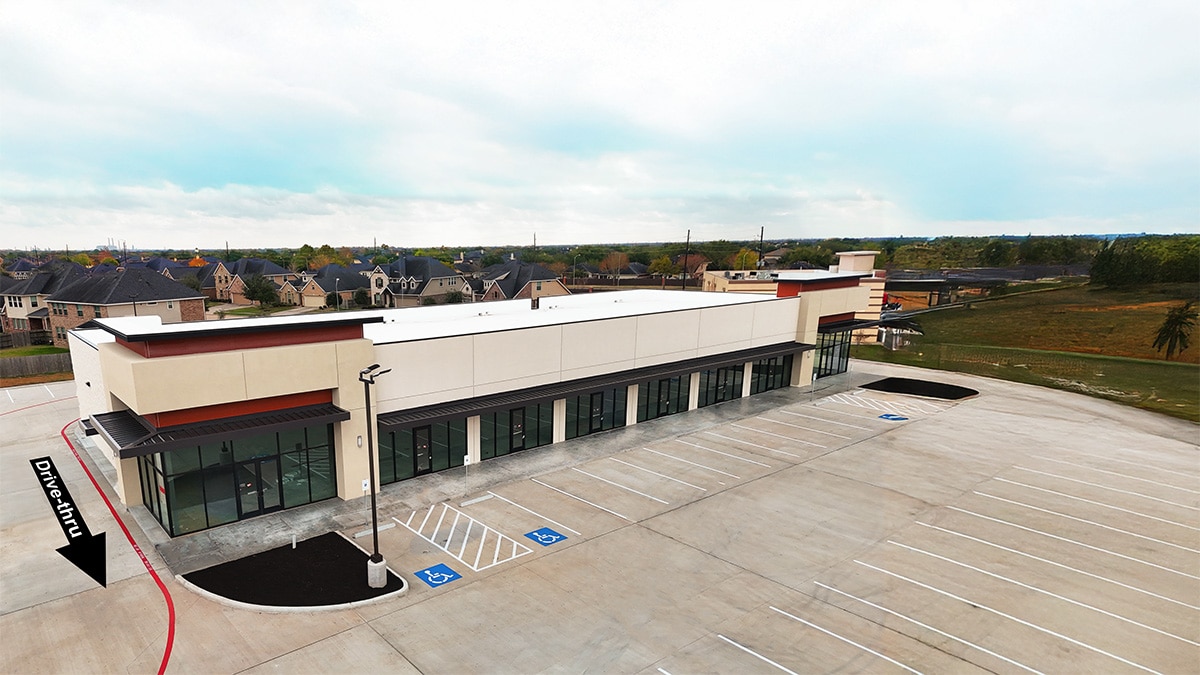
Mobile's retail sector stretches from the Bel Air Mall corridor along Airport Boulevard to the strip malls lining Government Street and the big-box anchors out toward Cottage Hill Road. These commercial properties face a roofing environment unlike almost anywhere else in the country, Gulf Coast humidity pushes annual rainfall above 65 inches, hurricane season runs half the year, and summer heat indexes regularly exceed 110 degrees. For property owners and shopping center managers in Mobile, the roof is not a background expense; it is the single most consequential factor in protecting tenant build-outs, inventory, and the HVAC infrastructure that keeps customers inside the store.
Strip malls along Hillcrest Road and the Schillinger Road commercial corridor predominantly carry aging built-up roofing systems installed during the construction booms of the 1980s and 1990s. Those systems have absorbed decades of tropical moisture cycling, and many are now well past their service lives. Transitioning these buildings to thermoplastic single-ply membranes, specifically 60-mil TPO or reinforced PVC, delivers meaningful improvements in both reflectivity and wind uplift resistance. The Florida Building Code wind load requirements that apply to southern Alabama construction demand tested membrane assemblies with documented uplift ratings, and our installations carry FM or UL certification for high-velocity hurricane zone exposure.
Tenant disruption is the primary concern for any occupied strip mall reroofing in Mobile. Anchor tenants at properties like the Springdale Plaza or the retail nodes along Interstate 65 operate on tight lease agreements with CAM recovery clauses that make prolonged construction a legal and financial liability for landlords. We structure our work around phased section-by-section tear-off, scheduling loud mechanical work before store opening at 9 a.m. and completing material staging in parking areas on the far perimeter of active tenant zones. Debris netting and temporary interior protection systems are standard on all occupied retail projects.
Flat roof drainage design is especially critical in Mobile's retail landscape. A shopping center roof that cannot shed water fast enough during a fast-moving Gulf squall risks interior flooding that shuts down tenants for days. Our drainage assessments include full tapered insulation calculations to meet the minimum one-quarter inch per foot slope requirement toward internal drains, combined with overflow scupper sizing based on local IBC rainfall intensity data for the Mobile Bay region. Clogged or undersized drainage is the leading cause of roof failures we see during inspections of older retail properties on Dauphin Island Parkway.
HVAC penetrations are dense on retail roofs, grocery anchors may have 30 or more rooftop units serving refrigeration and comfort cooling systems, while inline tenants in strip malls each bring their own unit replacements every 8 to 12 years. Every penetration is a potential leak point, and improper curb flashing is the single most common defect we document during due-diligence inspections of Mobile retail properties changing hands. We fabricate custom metal curb extensions to bring existing low-profile curbs up to the required 8-inch minimum height above the finished roof surface, and we install walkway pads to prevent membrane damage from HVAC maintenance technicians.
National retail brands with locations in Mobile typically require roofers to follow brand-specific construction standards. Dollar General, Walmart, and the regional grocery chains that anchor neighborhood centers each publish roofing specifications that dictate membrane type, thickness, attachment method, and warranty requirements. Our estimating team maintains current copies of these specifications and submits documentation packages through each retailer's facilities management portal as part of the project kickoff process, ensuring that repair or replacement work does not jeopardize the landlord's relationship with national tenants.
CAM budget planning for Mobile retail property owners needs to account for the accelerated degradation that Gulf Coast weather imposes on roofing systems. A TPO membrane that lasts 22 years in a dry inland climate may deliver 15 to 17 years of service life on a south Mobile County shopping center before the combination of UV intensity, thermal shock from afternoon thunderstorms, and hurricane season wind fatigue requires attention. We provide property managers with 10-year capital expenditure forecasts that feed directly into CAM reconciliation and budget reserve models used by asset management teams at regional REITs and private owners alike.
The Springdale area redevelopment, the ongoing growth of commercial retail near the Mobile Airport, and the steady expansion of big-box retail along Airport Boulevard have all created a wave of new construction roofing work in Mobile. New retail buildings in these corridors are being built to meet current IBC and ASCE 7 wind load maps, which require higher fastening densities at roof perimeters and corners. Our project managers attend pre-construction meetings with general contractors on these projects to coordinate membrane termination details at parapet walls, expansion joints, and storefront canopy interfaces, the details that separate a 20-year roof from one that develops leaks in year three.
Post-storm inspections are part of our standard service offering for retail property owners across the Mobile metro. After a named storm or a severe convective event that produces hail or high straight-line winds, our inspection teams document damage with infrared scanning, core cuts, and photographic records that meet the evidentiary standard required by insurance adjusters. Getting accurate documentation on the table quickly allows property owners to file complete claims rather than discovering additional damage months later, and it allows tenants to see that their landlord is actively managing the building, which matters at lease renewal time.
- How does hurricane season affect the roofing schedule for Mobile retail properties?
- Most experienced contractors in Mobile aim to complete major retail roofing projects between October and May, avoiding the June-through-September peak period when tropical weather can halt work mid-project. Phased scheduling allows sections of a shopping center to be completed and secured before the next active weather window opens. Emergency repair crews are staged locally throughout hurricane season to respond to storm damage within 24 to 48 hours of an event.
- What membrane system performs best on Mobile strip malls with heavy HVAC loads?
- 60-mil reinforced TPO heat-welded over polyisocyanurate insulation is the most common specification for Mobile retail roofs because it balances reflectivity, puncture resistance, and cost-effectiveness. PVC is preferred when chemical exhaust from restaurant tenants is present, as it offers better resistance to grease and solvent vapor. Both systems are available with 20-year NDL manufacturer warranties when installed to FM-approved specifications.
- Can reroofing work be done while tenants remain open in Mobile shopping centers?
- Yes, and most landlords in Mobile require it, closing even a portion of a strip mall for roofing work triggers lease disputes and CAM challenges from tenants. Phased work plans limit active tear-off to sections above vacant bays or areas between occupied tenants, and work schedules are coordinated with anchor tenant facilities managers to avoid peak sales periods like holiday weekends. Noise and odor management protocols are documented in the project plan and shared with all tenants before work begins.
- How are CAM charges for roofing repairs typically handled in Mobile retail leases?
- Most triple-net leases in Mobile retail properties allow landlords to pass through roof maintenance and repair costs as CAM expenses, while full roof replacement is often handled as a capital item amortized over the roof's useful life. Tenants negotiate CAM caps and exclusions at lease signing, so it is critical for landlords to have accurate useful-life documentation for existing roofing systems. We provide written condition assessments that landlords can reference in lease negotiations and CAM audits.
- What causes most flat roof drainage failures on older Mobile retail buildings?
- The most common cause is settled or compressed insulation that has reversed the designed positive drainage slope over time, creating low spots where water pools. Secondary causes include drain bowl displacement from traffic loading, debris accumulation in drains during heavy leaf and storm seasons, and undersized overflow scuppers that were designed to older rainfall intensity standards. A comprehensive drainage survey conducted after any significant rain event will identify standing water locations that need tapered fill or drain relocation.