
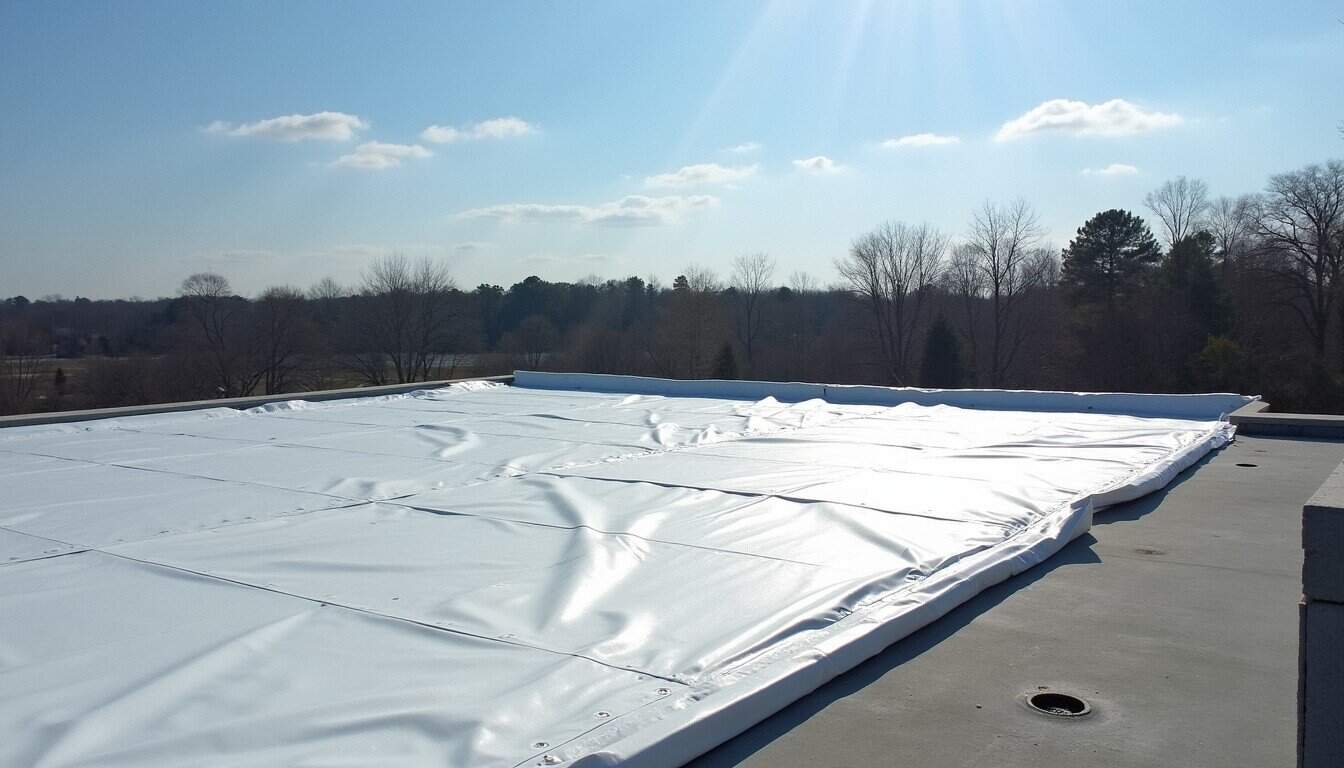
Mobile's commercial corridors include the Port of Mobile industrial waterfront, the Airport Boulevard and Beltline commercial belts, the Spanish Fort and Daphne eastern shore retail zones, and the Saraland industrial park. Storm damage repair and insurance claim documentation in this market requires a contractor who can produce GPS-tagged hail impact maps, wind damage assessments, and repair records in the format that commercial property adjusters use, the evidence that shows the full extent of what the storm did, beyond a bare repair estimate.
Storm damage roof repair and insurance claim documentation in Mobile, AL require a precision that standard repair work doesn't. A useful commercial roof damage assessment identifies hail impact density, wind-related membrane displacement, flashing damage, and equipment damage, all documented with GPS-tagged photography, impact measurements, and a written assessment formatted for the insurance adjuster reviewing the property. We know what documentation commercial property adjusters in AL look for, and we build our assessments to that standard.
Hail damage to commercial TPO and PVC roofing membranes in Mobile is not always visible to the naked eye at ground level, and it's often missed in cursory roof walkovers by adjusters who don't specialize in commercial roofing. Hail impact patterns create membrane fatigue that accelerates seam failure and UV degradation, the visible effect appears months or years after the storm, not immediately. We document hail impact density with close-range photography and, where needed, thermal imaging that reveals subsurface impact damage. That documentation is the basis for a complete claim.
Wind damage claims at commercial properties in Mobile typically involve membrane displacement or blow-off at laps, flashings, and edge metal, the first areas to fail under sustained wind load. We document the displacement pattern, confirm the failure mode (installation vs. weather-related), and provide a written assessment that distinguishes storm-related damage from pre-existing conditions. That distinction is critical to claim approval, and our documentation makes it clearly.
Once repair scope is set, we deliver the work to the documented specification, full membrane repair, edge metal, and flashing replacement where our assessment shows it's needed, not a patch sized to a partial estimate. If a settlement comes back covering less than the documented repair cost, we can provide additional photos or an updated assessment for the owner to submit to their carrier; we don't ask property owners to absorb a scope reduction that traces back to incomplete initial documentation.
We're your roofing contractor, not a public adjuster, we document and substantiate the roof damage so you and your adjuster work from an accurate scope. We don't file claims, negotiate settlements, or represent property owners to their carrier; those steps stay with the owner, their broker, and the insurance company.
Storm Damage & Insurance Claim Roofing Questions
How do you document hail damage on a commercial roof?
Our hail damage assessment includes: GPS-tagged photographs of impact locations across the full roof surface, impact density measurement per section, membrane cross-section sampling at impact locations (where the adjuster requires physical evidence), and a written assessment that documents the impact pattern, estimated hail size based on impact geometry, and the membrane's remaining serviceable life post-impact. This documentation matches the format that commercial property adjusters use to process hail claims.
What does hail damage look like on a TPO or PVC commercial roof?
On TPO and PVC membranes, moderate hail (1" diameter and above) leaves impact impressions in the membrane surface, circular depressions where the hail compressed the membrane and underlying insulation. The impressions are often not visible without close-range inspection on a dry surface in low-angle light. The damage weakens the membrane at impact points, creating stress concentration locations that accelerate future seam and surface failures. Our hail documentation shows the impact density map across your entire roof.
Can you meet with my insurance company or adjuster?
Yes. We participate in joint roof inspections when an adjuster requests one, and we point to the documented damage locations in the same terms a claims examiner uses. If the submitted documentation needs supplementation to reflect the full scope of what we found, we provide it. We don't negotiate the settlement or represent you to the carrier, that's between you and your insurer, but our documentation is built to give the adjuster a complete, accurate picture of the damage.
What if the insurance settlement doesn't cover the full repair cost?
That happens most often when the initial documentation missed part of the damage. When the settlement scope is lower than what our assessment showed, we can prepare additional photos, measurements, or an updated assessment for the owner to submit as a supplemental claim. Whether to pursue a supplement, and how to present it to the carrier, is a decision the property owner makes with their broker or insurer.
How quickly can you respond after a major storm event?
We prioritize post-storm response in Mobile. Emergency dry-in and temporary protection can typically be deployed within 24-48 hours of a major event, this stops active leaking while the full claim documentation is completed. Full damage assessment for insurance documentation is typically delivered within 3-5 business days of the initial site visit.